Booking a day on the water in Nassau should feel effortless. Instead, sifting through hundreds of operator listings usually creates more stress than excitement. You want a private experience tailored to your group, not a seat on a crowded deck. Finding the best private boat charter company Nassau reviews actually point to means looking past polished marketing photos and reading what guests wrote about what really happened.
This research phase is where your vacation begins. The gap between a mediocre outing and a day you talk about for years usually comes down to details previous guests already documented, in captain expertise, vessel condition, itinerary flexibility. Understand what to look for in that feedback, and you can pick a trusted private charter Nassau locals actually recommend, one that treats your time on the water with the respect you’d expect for it.
Why Reviews Matter When Booking a Nassau Charter
Online feedback is your best window into how an operator actually runs, day to day, in ways glossy photos can’t show you. A brochure shows pristine water and a smiling crew. Only recent guest accounts tell you whether the engine starts reliably, whether the captain briefs you clearly before departure, or how the crew handles a sudden squall. To tell a genuine review from a fake or incentivized one, look for specifics: named stops, a crew member mentioned by name, a particular moment that made the trip. Manufactured feedback tends to be vague, gushing without substance, or posted in clusters around the same date.
Patterns across recent reviews tell you more than a single five-star rating or an old complaint ever could. A top rated boat charter Nassau visitors keep praising will show that same standard held across multiple seasons, not just one lucky week. When punctuality, clean vessels and attentive crew show up again and again across months of reviews, that’s a well-managed operation investing in maintenance and staff training. On the other hand, even a highly rated operator deserves a second look if recent reviews mention declining vessel condition or rushed itineraries. That usually means management stretched resources too thin during peak demand.
Genuine feedback also shows how an operator handles things when they go wrong. Mechanical trouble or a sudden squall tests a crew far more than a perfect sunny afternoon does, and reviews describing how staff handled a disruption tell you a lot about how prepared that crew really is. An operator who responds to negative feedback with an explanation and a fix, rather than defensiveness, is showing you the accountability that matters when you’re miles from shore with your family.
Evaluating Captain Experience and Local Knowledge
The vessel gets you there. The captain decides whether you arrive safely, comfortably, and at the right spot for that day’s conditions. Look for documented local licensing, years actually navigating Bahamian waters, and real knowledge of the seasonal patterns that affect snorkeling visibility and fish activity. Nassau’s sandbars shift constantly, and reading them in real time, adjusting course as tides change or afternoon wind picks up, is a skill only experienced crews have.
Navigating Nassau’s Shallow Banks Safely
Bahamian waters demand respect, because charted depths often don’t match what’s actually there. Sediment shifts constantly, tides move fast, and a route that worked yesterday might not work today. A seasoned captain adapts throughout the day, reading water color and surface texture to avoid grounding and to keep you in calm water sheltered from open-ocean swell. That skill shapes your whole day: even moderate chop gets exhausting over several hours if the crew can’t find the sheltered channel or won’t adjust speed for the sea state.
Local captains say it plainly: Nassau’s shifting sandbars demand real-time navigation adjustments that only an experienced crew can make safely. When you’re reading Nassau charter company reviews, weight comments about a smooth ride and smart stop selection over ones that just name-drop a famous sandbar. Reaching a beautiful spot means little if the ride there left everyone seasick. A good captain explains the routing as you go, why one spot works better than another today, given the wind, the tide, the crowds at the popular anchorages.
Reading Between the Lines in Crew Feedback
Boat-handling skill is the baseline. What separates the exceptional charters is how the crew treats you. Look for reviews that mention specific moments of attentiveness or a captain’s storytelling, since those details point to a guide who actually engages with guests rather than just ferrying them between waypoints. A captain who talks about the reef ecology, Bahamian history, or how the fish are running turns a boat ride into something you remember.
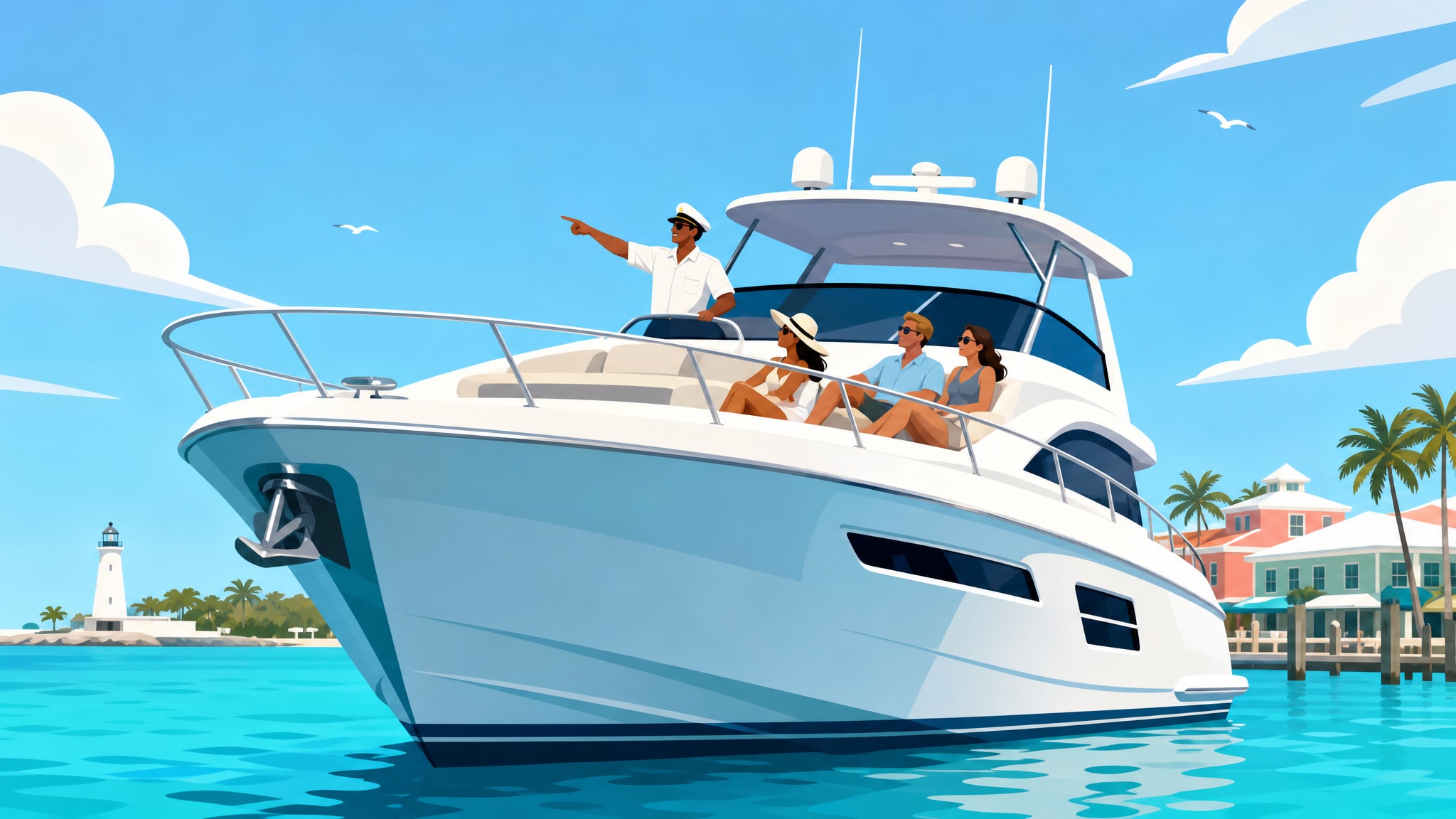
You can judge a crew by how reviewers describe the unscripted moments, an equipment adjustment, a lunch break, a dolphin that shows up out of nowhere. A crew that anticipates what you need before you ask, explains safety without condescension, and keeps the energy up through a long day is showing you a level of professionalism that separates career mariners from seasonal hires. Every Rig Charters boat is privately booked, so you never share deck space or the captain’s attention with strangers, and that lets the crew build real rapport with your group and set the pace around you instead of running a fixed schedule built for a busload of strangers.
Matching Boat Size and Type to Your Group’s Needs
The boat you pick shapes the day more than most people expect, because hull design and layout serve different purposes well beyond how many seats are on board. How much boat size matters depends entirely on your group and what you’re planning to do, so match the vessel to the trip rather than assuming bigger is automatically better. A smaller center console gets you into the shallow water and onto the beach with ease, which suits couples and small families set on snorkeling. A bigger sportfishing yacht gives you stability, shade and real fighting chairs, which matters for serious anglers or a big multigenerational group.
Intimate Rides for Couples and Small Families
Smaller boats reach the shallow creeks and quiet beaches that a deeper-draft vessel simply can’t get to, which opens up anchoring spots away from the crowds. These boats also sit lower in the water, so getting kids or nervous swimmers in and out is easier, and that means more actual swim time and less standing around. For a group under six, a smaller boat also means the crew’s attention is on you, tailoring commentary and help to what your group actually wants instead of splitting focus across dozens of passengers.
Private charters tend to score higher on satisfaction than group tours, largely because of the pacing and the access a smaller boat allows. When you’re reading reviews of the best rated Bahamas boat tours, notice whether guests with a group your size describe the boat as spacious or cramped. That tells you whether the vessel actually fits the group size, rather than the operator squeezing maximum revenue out of every booking. Our guide to private versus group tour differences goes deeper into why a smaller, dedicated boat often beats a bigger yacht for an intimate group, even without the extra amenities.
Stable Platforms for Larger Groups and Fishing
A group over eight, or a long day of fishing, calls for a boat built to sit still in the water with room for several anglers to work at once. Sportfishing boats and catamarans have a wider beam and deeper draft, which cuts the rolling motion on a longer run out to the reefs or the deep-water trolling grounds. These boats usually come with dedicated gear storage, rod holders placed for actual use, and a shaded cockpit where the non-anglers in your group can relax without getting in the way.
Stability matters just as much when grandparents and young kids share the same boat, since too much motion ruins the day no matter how good the destination is. Reviews that mention a comfortable ride in moderate chop, or a layout that works for a wheelchair or a stroller, tell you the operator thinks about accessibility as something real, not a box to check. Get the boat size right, and everyone on board stays comfortable and engaged instead of just enduring the ride.
Assessing Customization Options in Charter Reviews
A true private charter is one willing to bend the itinerary to what you actually want, and to what the water is doing that day. Look for flexible stop durations, a backup spot when the main one is crowded or the conditions are wrong, and a crew that tells you when the plan needs to change because the weather or the marine life shifted. Rig Charters builds every itinerary around your preferences and around the day’s actual marine conditions, so you land at a snorkeling spot that’s calm and clear rather than one compromised by wind or poor visibility.
Flexible Itineraries vs. Fixed Routes
An operator running a fixed route is optimizing for fuel and a predictable schedule, not for you, even if they call it a private booking. Real customization means your captain asks what you care about before you even leave the dock, and stays open to changing course mid-trip if you find something better or the conditions call for it. Reviews that mention an impromptu turtle encounter, extra beach time on request, or a lunch spot moved because it got crowded tell you the crew is trusted to make calls that benefit you, not just follow a script.
Expect your captain to suggest a plan B when the original one isn’t working, and to know why. That’s local knowledge doing something for you beyond just getting you from point A to point B. Best private boat charter company Nassau reviews keep pointing to exactly this kind of adaptability as what separates a trip you remember from one that fell flat, because even a perfectly planned itinerary falls apart the moment conditions make the planned stop unpleasant or unsafe.
Verifying Inclusions Through Guest Photos
Marketing photos show the best version of a boat and a destination, and they don’t always match what’s actually on the water that week. Photos guests post themselves show you the real thing: seating, shade, the actual state of the snorkel gear, what the beach looks like at low tide. These unstaged shots tell you whether a promised freshwater shower or an uncrowded beach access actually shows up on a normal day, not just for a promotional shoot.
Line up guest photos against the operator’s own description and you’ll spot the gaps. Worn upholstery, old electronics, a packed anchorage in someone’s photo, those are warnings a text review might gloss over. On the flip side, a photo of the crew helping with gear or pointing out a ray gliding by tells you the service actually matches the price.
Understanding Pricing Transparency and Value
A reputable charter quote spells out exactly what’s in and what’s out, so nothing surprises you later. That usually means fuel for the standard route, the captain and crew, basic snorkel gear, and any taxes or park fees, with anything extra like specialized fishing tackle or extra hours called out separately. Our charter pricing breakdown walks through what a quote should actually include, so you can compare operators on the same terms instead of getting pulled in by a low base rate that balloons once the add-ons show up.
Fair pricing is tied directly to the level of service a private booking promises, since a boat and crew that keep running smoothly cost real money to maintain. A charter that’s suspiciously cheap is usually cutting corners somewhere, on maintenance, insurance, or crew experience, and reviews eventually catch it. Weigh total cost against the vessel condition, the crew, and how much the itinerary actually flexes for you, not just against the lowest number you can find.
Hidden fees are the single most common complaint in negative reviews, especially fuel surcharges, gratuity expectations, or “optional” equipment rentals that turn out to be necessary. An operator confident in what they offer gives you a full quote upfront and answers questions about it without getting cagey, because they know an informed guest is a happier one. That kind of transparency is a sign of a business built to last, not one chasing a single booking.
Red Flags to Watch for in Nassau Charter Company Reviews
Some review patterns point to problems no amount of optimism should talk you out of. Watch for repeated mentions of mechanical failures, crew that seemed impaired, routes changed without explanation, or a dismissive response to a real concern raised on a trip. A vague or generic reply from the operator to a specific complaint is its own warning: it usually means they’re not willing to own the issue or fix it.
If the marketing photos look dated and recent guest photos show real wear, that’s an operator misrepresenting the current state of the boat to get bookings. And if reviews keep mentioning a different captain or crew than what was advertised, that’s a bait-and-switch: the experienced team in the promo photos gets swapped out for less qualified fill-ins once demand peaks. Call the operator directly before you put down a deposit. It’s the easiest way to confirm the current boat, crew, and standards that reviews alone can’t fully guarantee.
Safety red flags get zero tolerance, no matter how good everything else looks. Missing life jackets, expired flares, no real weather monitoring, a captain who ignores passengers who are clearly uncomfortable in rough water, these point to negligence that puts lives at risk, not just a disappointing afternoon. A trustworthy operator answers safety questions readily and can show you certifications, insurance, and maintenance records without hesitation.
Planning Your Private Charter Experience With Confidence
Run through the criteria above and an overwhelming list of options turns into a confident decision that actually fits your group. Build a simple checklist: captain qualifications, vessel specs, how much the itinerary flexes, pricing transparency, recent review patterns. That’s what separates an operator coasting on an old reputation from one earning its praise trip after trip.
Do the research and the day on the water gets to be what it should be: stress-free.
Nail down your requirements and confirm what an operator can actually deliver before you book, and you close the gap between what you expected and what shows up dockside. Once you’ve checked every box, book your custom private charter knowing your money is going toward a crew that actually delivers the private experience you pictured.
That same checklist doubles as a script for your first call with an operator. Tell them exactly what you want and what worries you, and a good operator will answer with real expertise and a plan built around it, not a canned package. How they respond to that conversation tells you almost everything you need to know before you ever step on the boat.