Planning a private boat trip in the Bahamas starts with one practical question: how many people can a private charter boat in Nassau actually hold? Get that number right and you book a vessel that feels spacious rather than cramped, especially when your goal is exclusivity, not just transportation. Private charters work differently than group tours because you reserve the entire boat. Capacity becomes about your group’s comfort, not about filling empty seats to hit a quota.
Understanding Charter Boat Capacity in Nassau
Charter boat capacity in Nassau isn’t one universal number. It shifts with vessel length, hull design, and what the boat is built to do. Bahamian maritime regulations set strict safety baselines for commercial vessels, but the operators worth booking with know the difference between the legal maximum and the guest count that actually makes for a premium day out. You’re booking a private environment where space equals luxury, so the number that matters is how many guests fit comfortably, with room left for gear, movement, and relaxation.
That distinction matters because a boat legally rated for twelve passengers can feel crowded with eight adults if everyone’s brought snorkel gear or fishing tackle. Safety equipment, coolers, and seating all eat into the deck space guests actually use. So operators size a charter around those functional realities, not just the number stamped on the certificate.
Capacity Ranges by Vessel Type for Bahamas Charters
Different hulls suit different group dynamics, and matching your headcount to the right vessel class is what prevents disappointment on the water. Here’s how that typically breaks down for private hires in our waters, though individual boats vary within each category.
Center Consoles and Bowriders for Intimate Groups
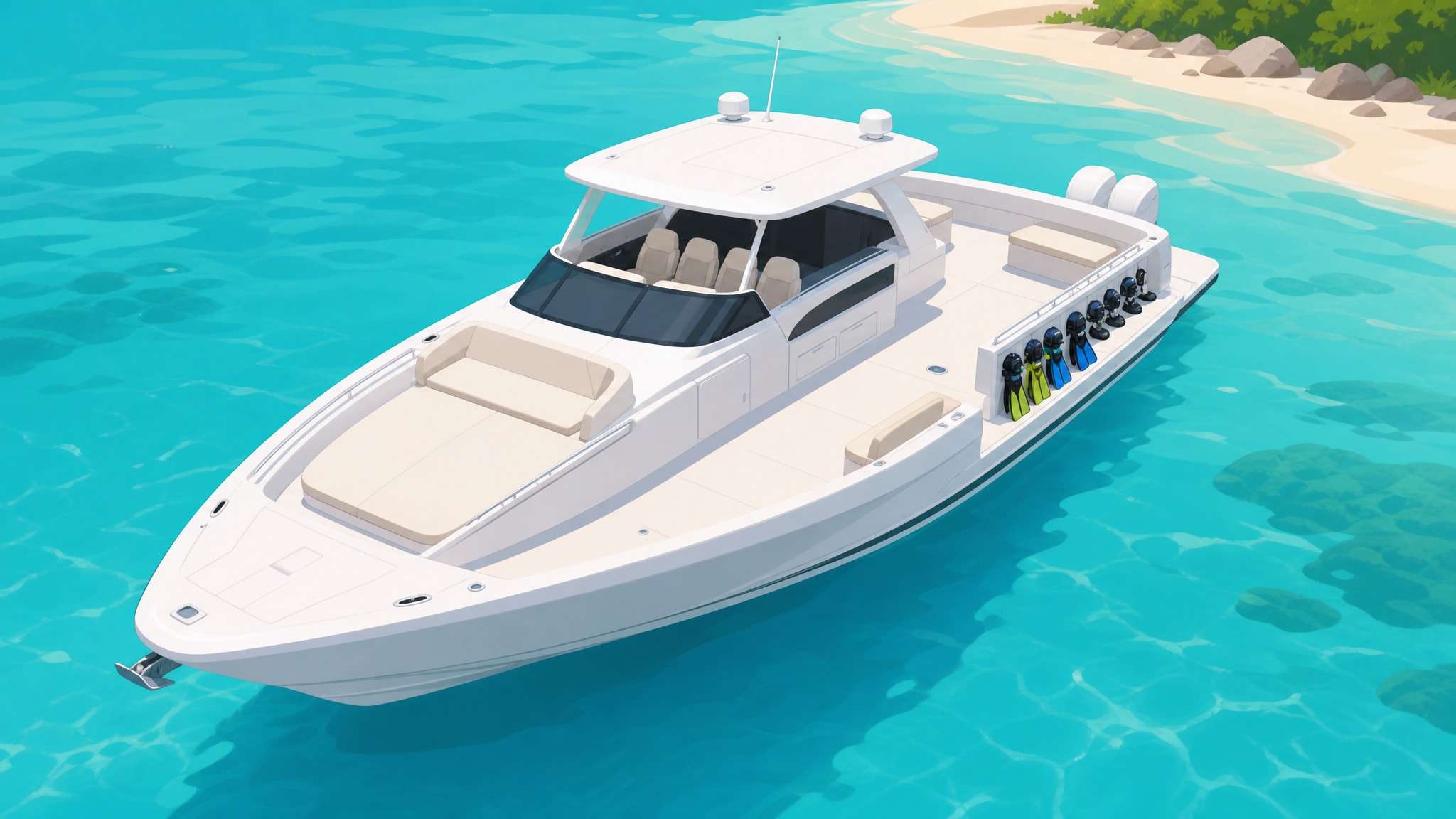
Center consoles, the boats most commonly used for snorkeling trips, are built to carry smaller groups so the deck stays open for gear and easy water entry. They work well for couples, families with young kids, or friend groups of four to six who’d rather be in the water than under shade. Bowriders offer similar capacity with extra forward seating, which suits harbor cruises or short island hops where swimming isn’t the main event.
These boats are quick and responsive, so you spend more time at your destinations and less time getting there. Their small footprint also gets you into shallow sandbars and secluded coves that bigger vessels simply can’t reach. If you’re after that kind of trip, intimate small boat charters give you the most direct connection to the water without giving up maneuverability.
Cabin Cruisers and Catamarans for Mid-Sized Parties
Cabin cruisers and catamarans sit between day boats and full yachts, typically hosting six to ten guests with more stability and more amenities. Catamarans have a wide beam that opens up deck space, which makes them popular with mixed-age groups, some in the sun, some in the shade. Cabin cruisers add an enclosed head and an air-conditioned salon, which stretches how long a trip can comfortably run compared to an open boat.
These vessels also handle chop better than a center console, which counts for something when you’re crossing a channel to an outer island or the weather turns during a full-day trip. This size range tends to suit multi-generational families, or two couples traveling together who want a shared experience without feeling packed in. The catamaran’s dual-hull design specifically cuts down on rolling, which guests prone to seasickness will notice.
Yachts and Custom Vessels for Large Gatherings
Yachts and purpose-built charter vessels carry ten to twenty-plus guests while keeping the private, uncrowded feel that defines this kind of hire. They come with multiple deck levels, dedicated crew areas, and enough built-in storage that guest spaces stay clear even with a full group aboard. At this tier you’re looking at flybridge sportfishers and custom cruising yachts built specifically for entertaining.
Bigger groups also benefit from a crew that can work without getting in the way of guest conversations or activities. Once your party outgrows the standard vessels, private charters for large groups open up boats with commercial-grade systems built for a long day on the water. On these boats, a higher headcount stops being a logistics problem. A full deck just feels lively rather than crowded.
Matching Group Size to Your Planned On-Water Activities
Your itinerary shapes usable space more than any seating chart suggests, because active pursuits eat up deck area that passive cruising doesn’t. How many guests a charter can comfortably carry depends on whether your group is sitting still or moving around with equipment.
Snorkeling needs open transom space for ladder access, gear staging, and helping guests back aboard, all of which cuts into capacity compared to a sunset cruise. Snorkeling charters with beach stops need a clear path between seating and the water entry point. A boat rated for ten sedentary passengers might only comfortably serve six active snorkelers. Wet gear takes up floor space, and guests need room to move without tripping over fins or masks.
Fishing charters need extra deck clearance for rod holders and fighting chairs, which reduces passenger capacity compared to a sightseeing trip. Anglers need clear access around the gunwales and open cockpit space to fight a fish, so non-fishing guests need a spot that stays out of the action. A sportfishing boat set up for four serious anglers can’t comfortably carry eight passengers, even if the bench seating technically allows it.
Island hopping sits between the two, needing space for beach gear, coolers, and the shuffle between water and land. The real move is telling your operator exactly what you’re planning, because a boat that’s perfect for a reef trip can fall short for deep-sea fishing with that same group size.
Safety Regulations and Comfort Considerations
Regulatory compliance is the non-negotiable foundation of every charter, but the good operators treat the legal maximum as a ceiling, not a target. Understanding why those two numbers differ is worth a minute of your time.
Bahamas Maritime Safety Standards
Bahamian maritime authorities set specific ratios of life-saving equipment per passenger, and that ratio directly shapes how many people a licensed charter vessel can carry. Every commercial boat must carry enough life jackets, flares, fire suppression gear, and communication devices for its certified passenger load, and inspectors check this regularly. These rules exist for survivability in an emergency. They aren’t a comfort standard.
Vessels go through annual surveys that check structural integrity, engine reliability, and safety gear condition before they’re licensed to operate. Captains hold commercial certifications covering passenger management, emergency procedures, and local navigation. So you never need to question whether a licensed charter meets baseline safety standards, regardless of the boat’s size.
Why Comfort Caps Differ from Legal Maximums
Private operators often cap bookings below the legal maximum, and that’s by design: it’s how they keep the uncrowded, premium feel that separates a private hire from a group tour. A boat certified for twelve might only take eight bookings, because that number keeps the walkways clear, guarantees everyone a shaded seat, and gives the crew room to serve people without rushing. That self-imposed limit comes from experience, not guesswork.
Comfort caps also account for things a certificate can’t capture: sea state, trip length, and who’s on board. Kids need closer supervision than adults, older guests need easier access to facilities, and mixed-ability groups need extra room for mobility aids. The operators worth booking build all of that into their recommendation instead of forcing your group into a number that technically fits on paper.
This does mean some boats can’t take every request, especially in peak season when demand piles up. But it also means the experience you get matches what you’re paying for when you choose a private charter over a mass-market one.
Planning Logistics for Different Group Sizes
Headcount shapes more than which boat you book. It sets the rhythm of the whole charter day. Bigger groups need coordinated resort pickups, staggered boarding, and a set meeting point, where smaller parties can handle things more on the fly. Tell your operator early once your group starts pushing toward a vessel’s upper capacity, because a last-minute addition or two can push a boat past its comfort zone even while it stays within the legal limit.
Transport doesn’t scale in a straight line either. Vehicles have fixed capacities, so groups above eight might need a bigger van or an extra trip. Boarding also takes longer with more people, especially with kids, older guests, or anyone who needs a hand getting aboard. Operators who’ve done this before build buffer time into the schedule for bigger parties, because a rushed boarding sets the wrong tone for the whole day.
Provisioning shifts with scale too: cooler space, freshwater, and how much the onboard facilities get used all climb with headcount. Give your operator the real numbers early and they can prepare properly instead of scrambling the morning you depart. This is where working with a real operator, not a transactional rental outfit, starts to show.
Choosing the Right Private Charter for Your Headcount
Picking a boat size involves trade-offs beyond simple per-person math. Your decision should come down to group dynamics, activity priorities, and budget, not just the smallest boat that technically fits everyone.
When to Book One Larger Vessel vs. Multiple Boats
Sometimes splitting into two boats beats cramming everyone onto one bigger one, especially when subgroups want different things or move at different speeds. Two center consoles let half the group snorkel while the other half fishes, then swap later without anyone standing around waiting. That flexibility is worth a lot for multi-generational families or friend groups with different interests.
On the other hand, keeping everyone on one yacht makes for shared memories and simpler logistics when the group is really one unit. A larger vessel means communal dining, group photos, and everyone seeing the same dolphin or turtle at the same moment, something two separate boats can’t give you. It comes down to whether you want one shared experience or two customized ones.
Budget Implications of Guest Count
Costs shift at certain capacity thresholds, since bigger vessels carry higher base rates, extra crew, and more fuel. Knowing how pricing scales helps you weigh whether a bigger boat or a second boat is the better value for your group. A charter pricing breakdown lays out those numbers before you commit to either.
Per-person cost often drops as headcount rises within a boat’s comfortable range, since fixed costs spread across more guests. But jumping up a size category just to fit one or two extra people can spike the price out of proportion. Sometimes a slightly tighter fit on a mid-size boat is the smarter call financially than upgrading to a yacht you won’t fully use.
Let your priorities drive the budget decision, not just the arithmetic. If space is what makes your trip, paying for the right capacity is worth more than what a spreadsheet says.
Next Steps for Booking Your Nassau Boat Charter
A good vessel recommendation needs real detail: your group size, what you plan to do, and what comfort means to you. A vague inquiry gets a vague answer. A specific one gets you matched to a boat that actually fits, instead of whatever’s free that day.
Share your exact adult and child counts, any mobility needs, and your main activity goals when you request a custom charter quote. Include your preferred dates and any flexibility, since availability shifts by season and some boats book out months ahead in peak periods. Mention any special occasion or must-have amenity too, so your operator can point you toward a boat that goes beyond the basics.
That back-and-forth is what turns a capacity question into the trip you actually want. Your operator wants to get this right just as much as you do, because a mismatched boat means an unhappy guest. Give them the full picture upfront, and there’s nothing left to fix once you’re on the water.