A private charter day in Nassau gives you freedom that crowded group tours can’t match. But enjoying that exclusivity takes packing with intention, not tossing random beach items into a bag. Know what to bring on a Bahamas boat charter and you’ll spend your time exploring turquoise water and secluded cays instead of managing sunburn, blisters, or a waterlogged phone. This packing list sticks to gear and comfort essentials, because getting the basics right is what makes a private charter feel premium.
Sun Protection Essentials for Nassau Waters
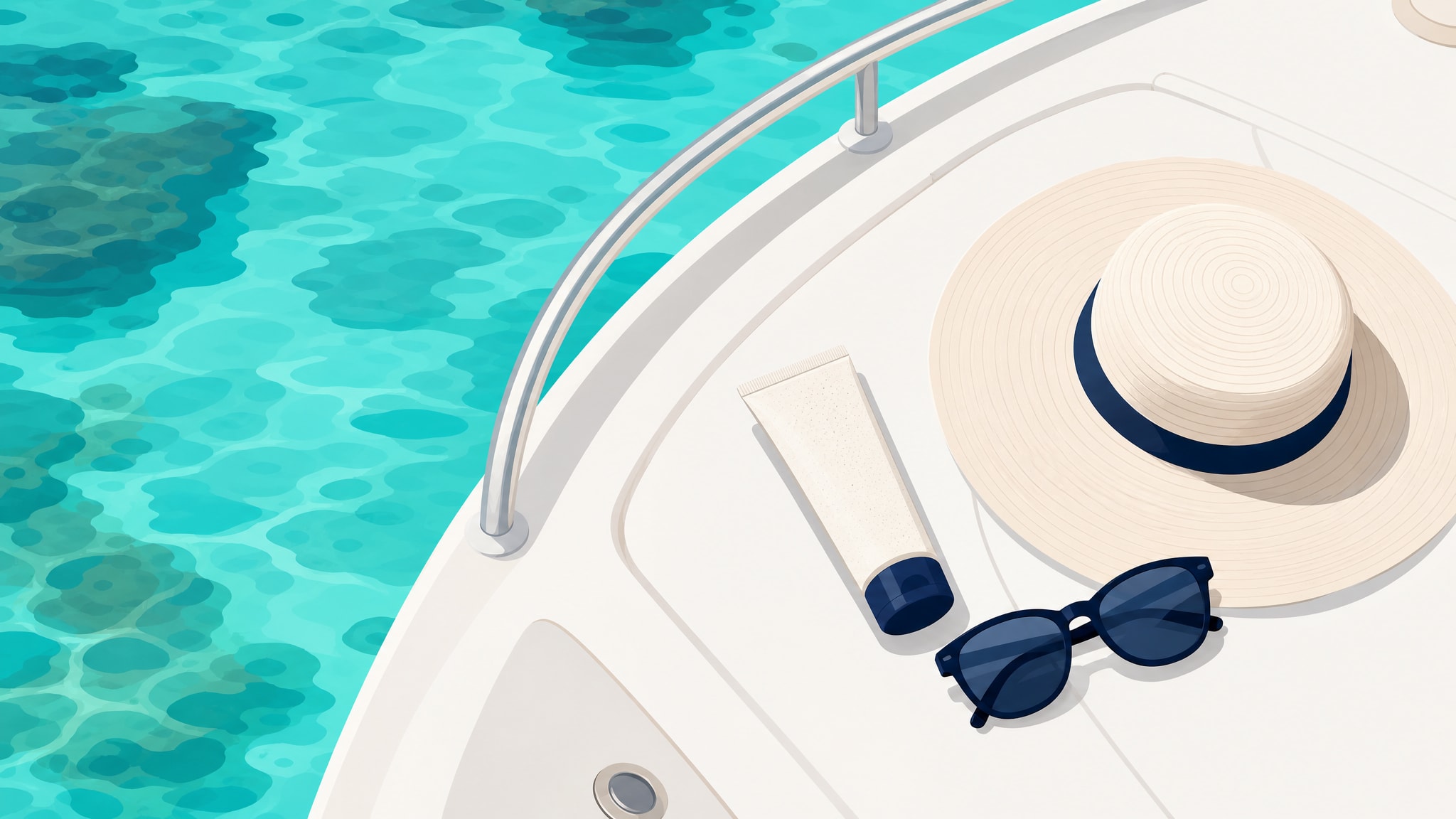
The Bahamian sun demands respect no matter the cloud cover or the season. Nassau’s UV index frequently hits extreme levels (11+) year-round, so you need SPF 50+ even when the sky looks overcast or a breeze masks the heat. Water reflection nearly doubles your exposure while you’re snorkeling or cruising between islands, so reapply often and thoroughly.
Reef-Safe Sunscreen Standards
Bahamas National Trust guidelines recommend mineral-based sunscreens with zinc oxide or titanium dioxide, since these prevent coral bleaching in the protected marine areas where you’ll likely be snorkeling. Chemical filters like oxybenzone and octinoxate damage the reef ecosystems that make spots like the best snorkeling spots near Nassau worth visiting. Check the active ingredients before you buy. Plenty of products marketed as “reef-friendly” still contain the same harmful chemicals despite the label.
UPF Clothing and Hat Selection
A long-sleeve rash guard with a UPF 50+ rating gives you coverage that sunscreen alone can’t match over hours of direct sun. A wide-brimmed hat with a chin strap stays put in the trade winds far better than a baseball cap, and a cap leaves your ears and neck exposed to a burn after just thirty minutes on open water. Lotion wears off faster than most travelers expect, especially once you’re in and out of saltwater all day, so a physical barrier does the work sunscreen can’t.
Proper Footwear for Boat Decks and Beach Landings
Your footwear affects both your safety and the condition of the vessel you’ve chartered. Flip-flops offer no traction on a wet fiberglass deck, and they give zero protection when you’re landing on a shoreline where submerged rocks or sea urchins hide beneath the shallow surf.
Non-Marking Sole Requirements
Non-marking soles are mandatory on private charter boats. Black rubber scuffs the gel coat and creates slip hazards for everyone onboard. Deck shoes or sport sandals with white rubber outsoles grip wet surfaces without wrecking the vessel’s finish. Crew members spot the wrong footwear the moment you step aboard, and wearing it may mean you’re restricted from certain areas of the boat, or asked to go barefoot instead.
Water Shoes for Rocky Shorelines
Guests who bring broken-in water shoes report fewer injuries during Rose Island beach landings than those who show up in flip-flops or go barefoot through the tidal zone. Water shoes protect against sharp coral fragments, hot sand, and the hidden debris that piles up on uninhabited cays where nobody’s raking the beach. Never assume a landing means soft sand. Some of the most beautiful, secluded stops involve wading through rocky shallows before you reach dry ground.
Snorkeling Gear and Swimwear Strategy
Maximizing your time in the water means minimizing the fumbling once you arrive at each stop. The right swimwear and gear decide how much of your charter you actually spend exploring underwater, versus adjusting straps or changing clothes.
Personal Masks vs. Charter Equipment
Quality gear comes with your charter package, but bringing your own well-fitted mask still pays off for hygiene and comfort. A rental mask works fine for casual swimmers. Experienced snorkelers know a familiar seal is what stops the leaking and fogging that pulls your attention away from the reef. You want a mask that feels like an extension of your face, not something you’re constantly clearing between breaths.
Swimwear Layering for Comfort
Wear your swimsuit under your travel clothes and you skip the awkward changing routine entirely, which means you can get in the water the moment conditions look right. A quick-dry layer over your swimsuit moves you from cruising to swimming with no need for privacy or a wardrobe change on a shared deck. It’s a small habit that turns dead transit time into an exploration moment, say, when your captain spots dolphins or finds an anchorage nobody planned for.
Wind and Spray Protection for Open Water
Trade winds create a chill you won’t expect given how warm the air feels, especially on longer transits between islands or an early morning departure. A lightweight windbreaker or long-sleeve rash guard is your armor against salt spray, which soaks clothing and pulls body heat away faster than most passengers plan for when mapping out a Bahamas boat trip.
One layer is enough to keep you out on deck for the most scenic stretch of the trip, instead of driven below by the cold.
Cotton t-shirts turn heavy and cold once they’re soaked with spray. Synthetic fabric dries fast and still keeps you warm even damp. Pack this one item, and you’re the guest enjoying every mile of open water instead of waiting out the ride for warmer conditions that might not come.
Protecting Electronics and Valuables Onboard
Salt spray is constant on open-water charters, and it finds its way into camera housings and phone cases that aren’t properly sealed. Our captains provide shaded seating and secure storage, but a personal dry bag is what actually keeps your electronics safe once you’re deep into an active snorkeling stop or an unexpected weather shift.
Waterproof Bags and Cases
A submersible dry bag rated IPX8 gives you real protection against an accidental drop or a full day of spray. A hard-shell waterproof case works better for a phone or camera you need to keep shooting on, since you get touchscreen access without pulling off any protective layer. Skip the zip-lock bag or the towel wrap. Salt finds the gaps, and it can ruin a phone within minutes of contact.
Secure Storage Options
Private charters give you a dedicated storage compartment, safe from shifting gear and foot traffic during the ride. Waterproofing is still on you, though: enclosed storage guards against theft and impact, not against the humidity or condensation that builds up inside a sealed compartment. Treat any electronic device as exposed to moisture unless it’s sitting inside a purpose-built waterproof case.
Motion Sickness Prevention and Personal Comfort
Ocean conditions shift without warning, and even a calm morning can turn into a choppy afternoon swell that catches guests off guard. Take your motion sickness medication thirty minutes before departure. It works far better than anything you try once the nausea has already set in.
Pack your own remedy ahead of time and you’re covered by a formula that actually works for you, rather than whatever the crew happens to have on hand. Ginger chews, acupressure bands, or a prescription patch all work for travelers who can’t tolerate a traditional antihistamine or just want a non-drowsy option. Prevention matters here: recovering from full-blown seasickness eats hours that no amount of calm water afterward can give back.
Final Checklist Before Departure
Check your packing list against your actual trip conditions and you’ll skip the last-minute scramble. Ask your captain about seasonal wind patterns, planned stops, or an activity like fishing in Nassau waters that might call for gear beyond the basics.
Review this list against your confirmed itinerary before you go. Private charters bend to your preferences and the weather in ways a fixed-route excursion never will. When you’re ready to book your custom private charter, ask your crew about any gear question or accessibility need, so you know exactly what’s provided and what to bring yourself.